
Craft / Practice
Making a Place Felt
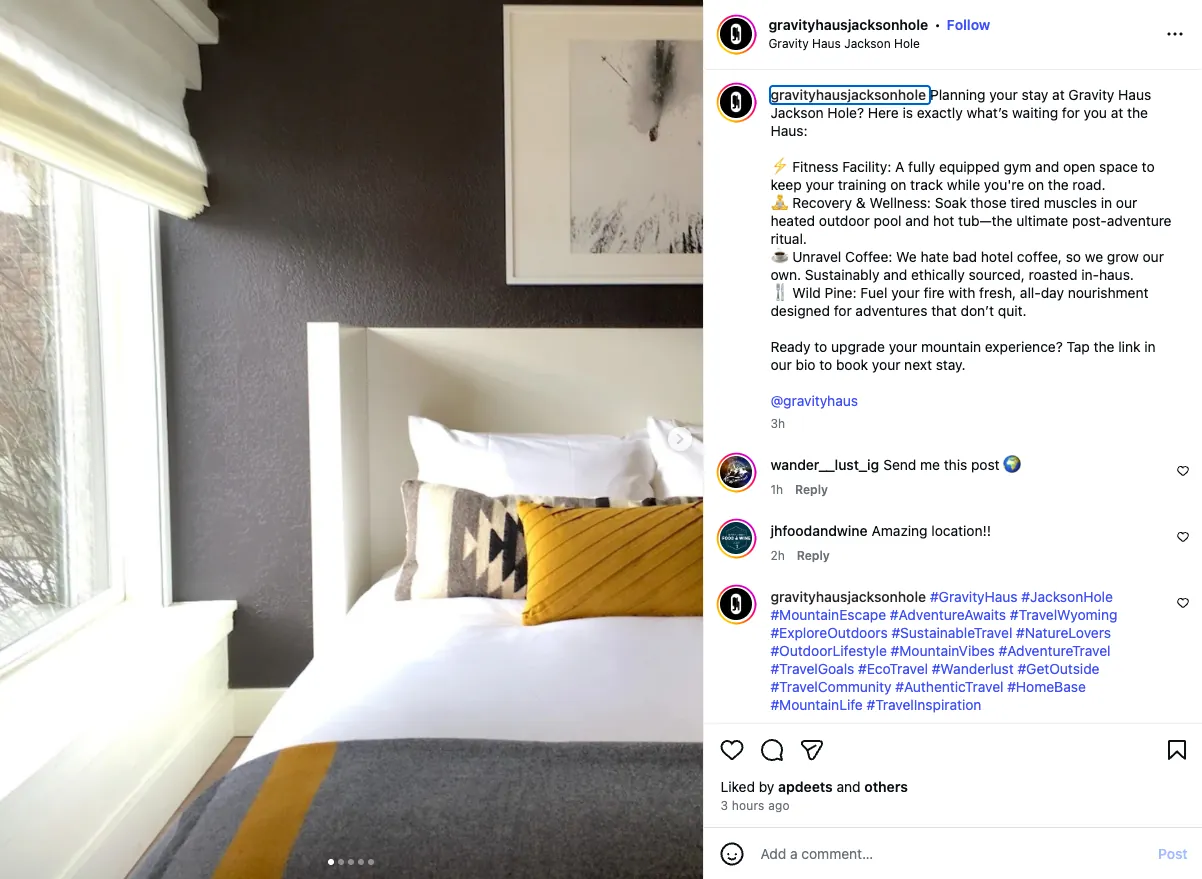
Inside the social strategy shaping digital presence for Gravity Haus Jackson Hole
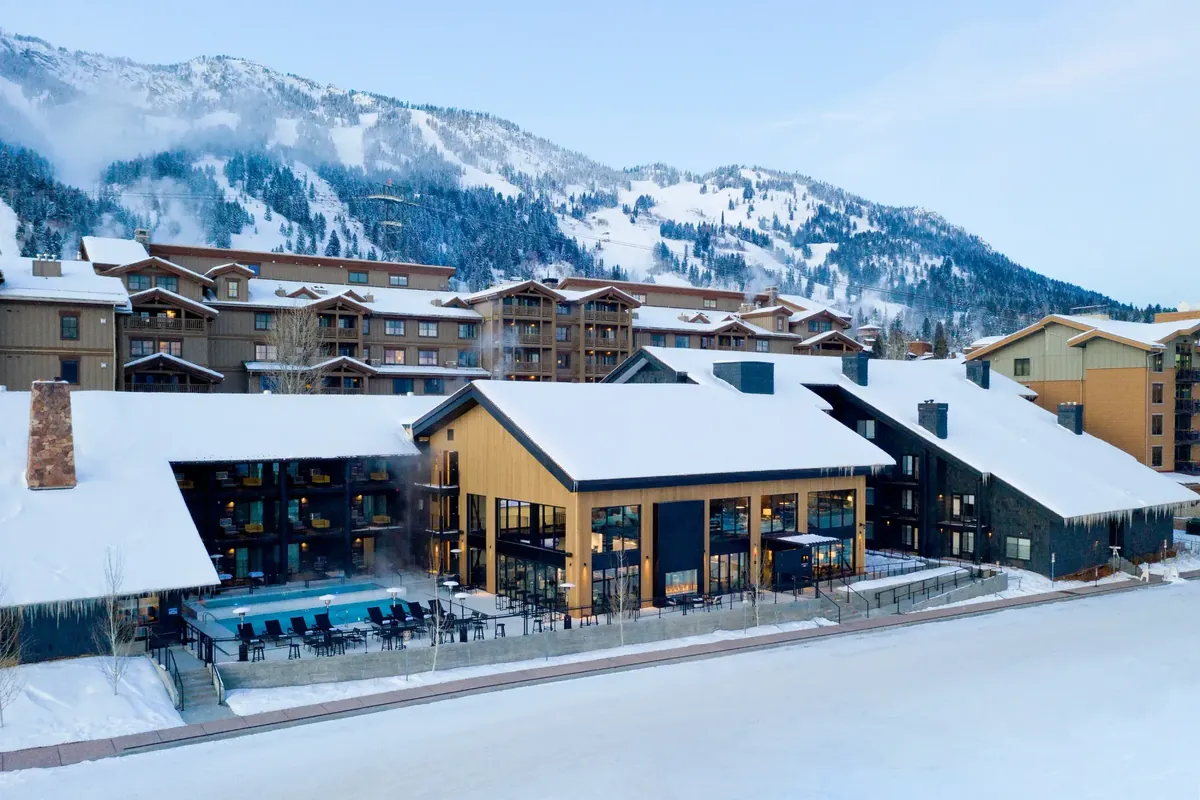
There’s no shortage of beautiful imagery in mountain hospitality. Perfect light. Empty rooms. Wide-angle views that promise escape without ever showing who’s already there.
By the time Gravity Haus began working with The Collective, the category had become visually fluent — and emotionally thin.
On property, Gravity Haus Jackson Hole told a different story. It was active, social, local. People lingered. Events filled rooms. Conversations carried past closing time. The disconnect wasn’t a lack of identity — it was a failure of translation. The social presence hadn’t yet learned how to move at the same pace as the people inside the building.
The work began with a simple question: What if social media didn’t advertise Gravity Haus — but behaved like it?
Listening Before Making
Rather than benchmarking against other hotels, the early work focused closer to home. Local creators. Community accounts. Event calendars. Weather shifts. Engagement patterns that hinted at real-world behavior.

What became clear was that the Jackson Hole audience wasn’t looking to be sold a destination. They were responding to signals of belonging — moments that felt lived-in rather than staged.
The strategy that emerged wasn’t built around aspiration, but participation. Social would act less like a brochure and more like a front door.
Voice, Rhythm, and Restraint
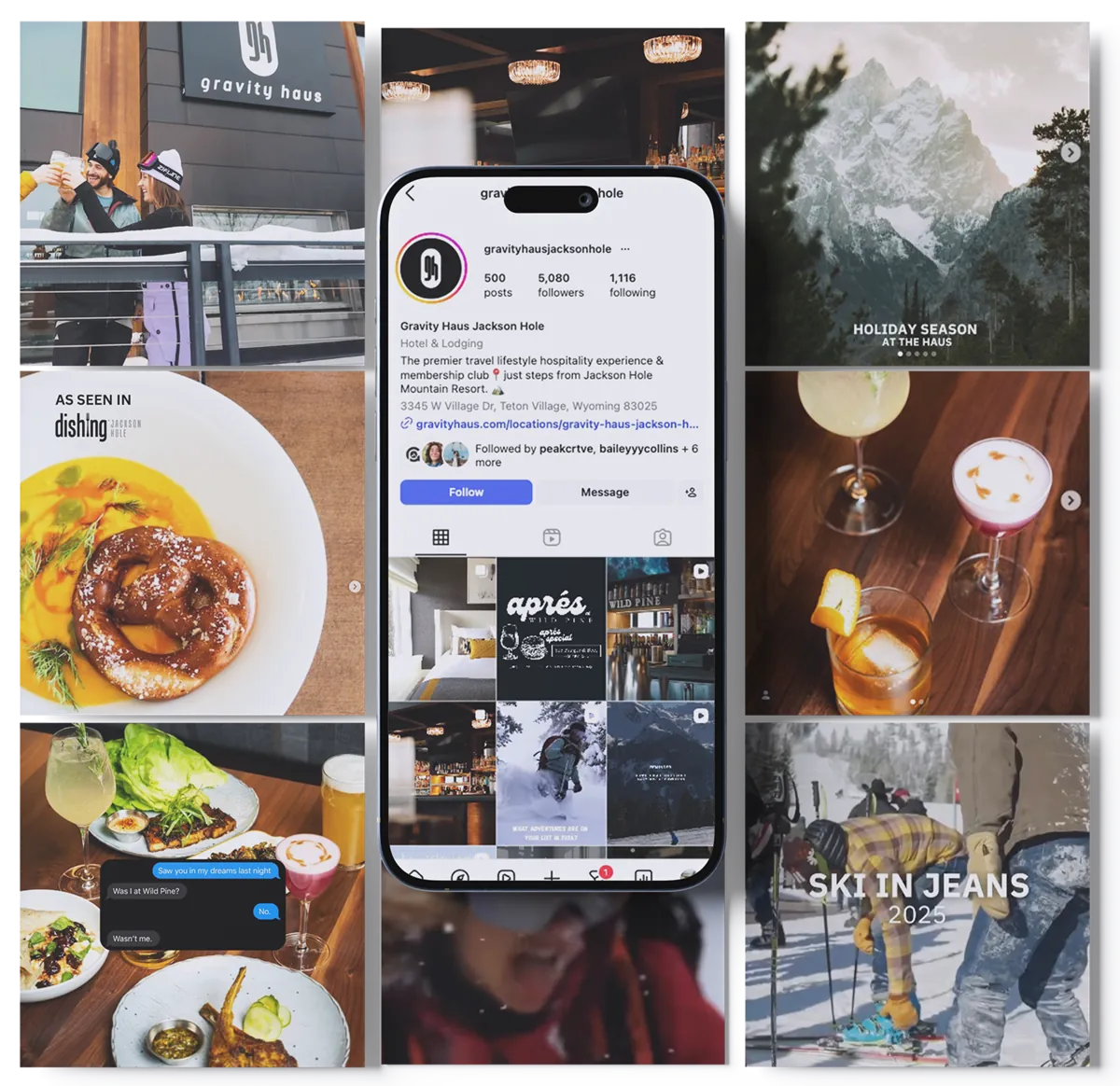
The voice settled into something confident, welcoming, and intentionally unpolished. Language stayed conversational. Captions prioritized clarity over cleverness. The goal wasn’t to sound like hospitality — it was to sound like Gravity Haus.
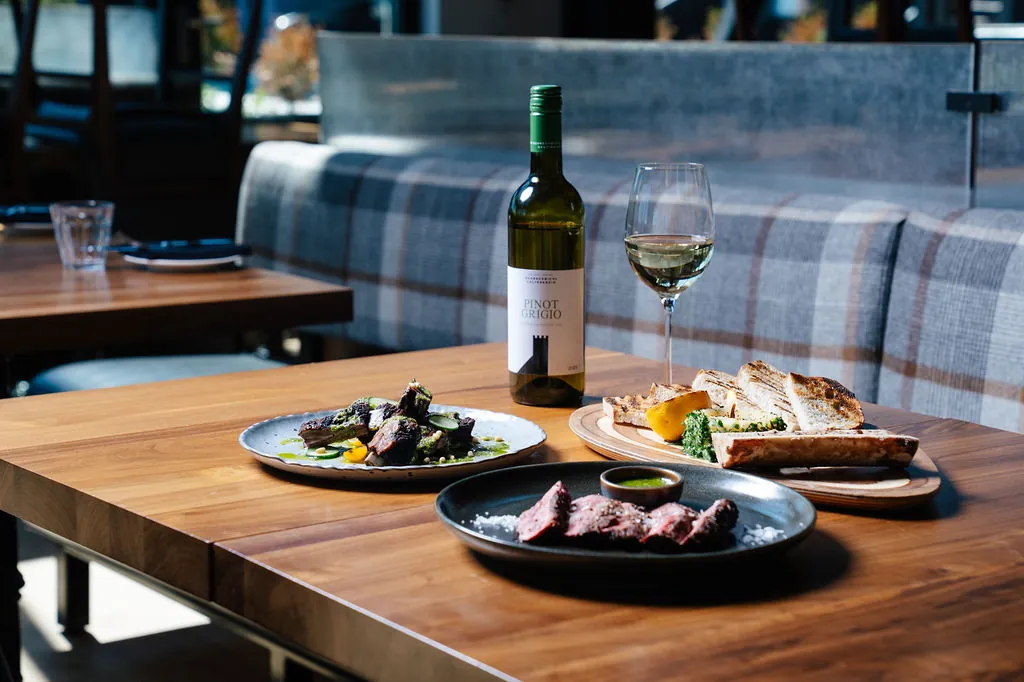
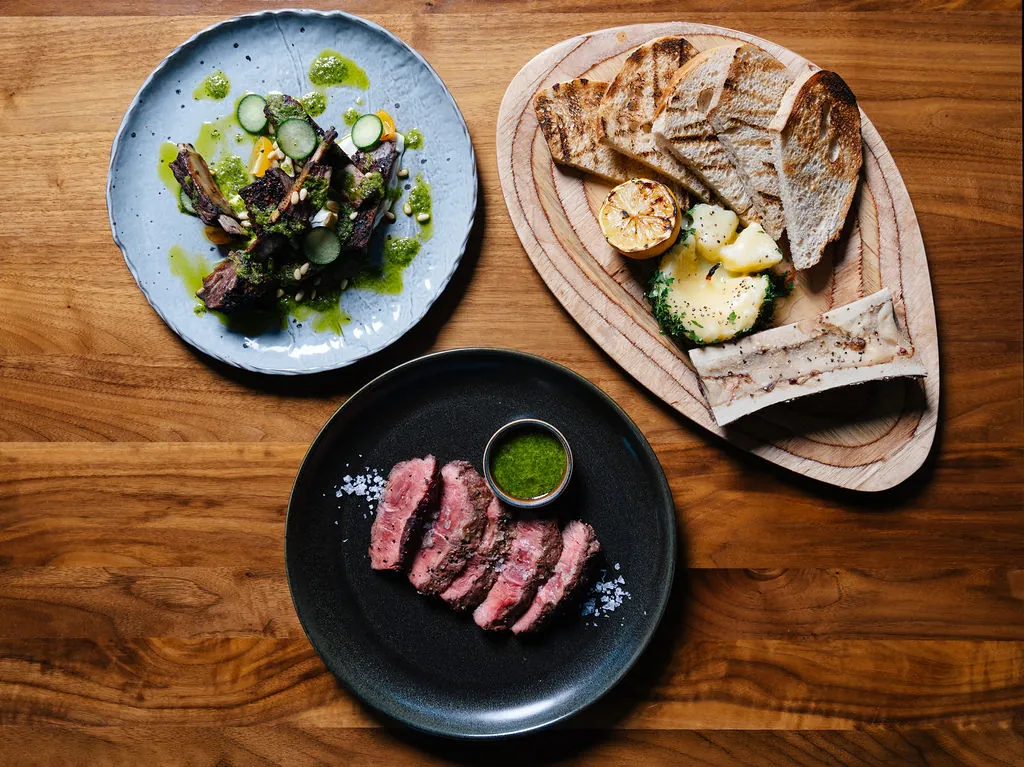
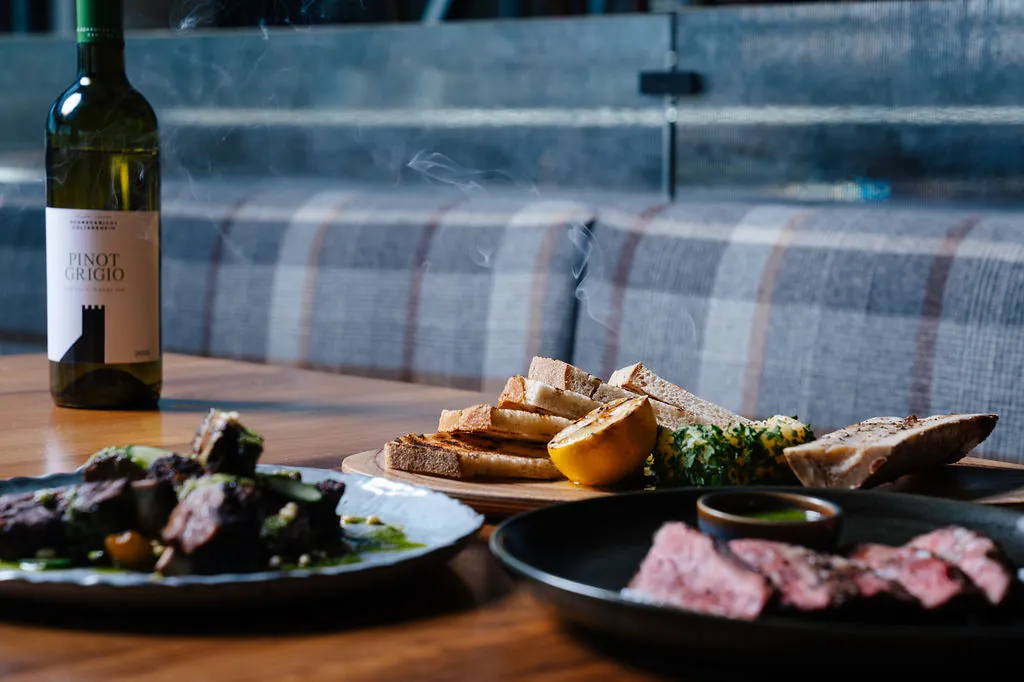
Visually, rhythm mattered more than perfection. Fast, high-energy Reels created discovery. Grounded posts carried event information. Dining and lifestyle content leaned into personality over polish. Empty spaces gave way to human ones.
Jackson Hole itself became a collaborator. Seasonality dictated pacing. Locals dictated tone. Tourist messaging was replaced by something quieter and more specific — an acknowledgment that community responds differently when it feels seen rather than targeted.
Working Within the Lines
The work wasn’t built in ideal conditions. Bandwidth was limited. Brand guidelines mattered. Production had to be sustainable, not constant.
Instead of fighting constraints, systems were built around them: repeatable formats, content tied to real programming, workflows that respected the pace of life on property. Consistency replaced volume. Cadence replaced pressure.
One decision marked a turning point. Event-led content began appearing earlier and with more conviction — framed not as announcements, but as moments worth planning around. There was internal hesitation. Would this feel too promotional?
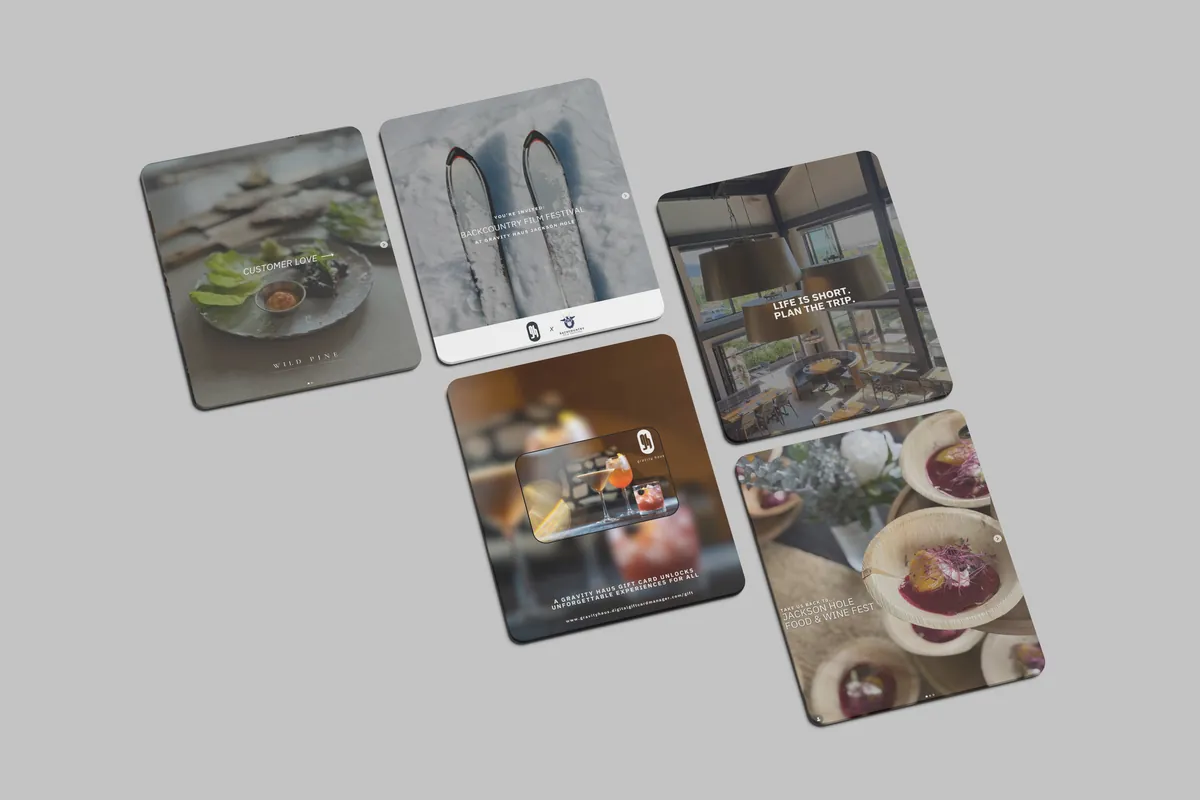
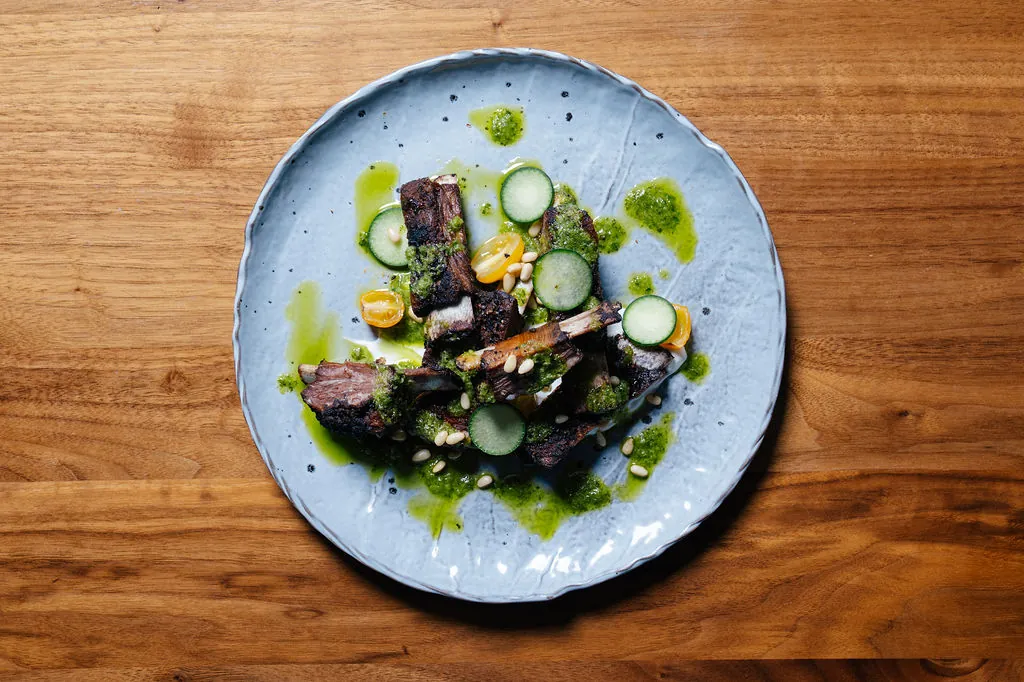
It didn’t read that way. Framed as moments rather than schedules, events gave people something to plan around.
What We Watched For
The most meaningful signs weren’t metrics.
The signals worth watching were saves and shares, which say more about intent than attention does.
The aim was quieter: dining content that felt approachable, a feed staff and members would mention in conversation, and one where locals would recognize themselves.
Social stopped acting like marketing — and started acting like community.
What the Work Taught Us
Polish, it turns out, isn’t always the right answer. Posts built around people were favored over posts built around perfect light. Presence mattered more than perfection.
Promotion without narrative was set aside. Context did the work urgency usually does: events were framed as experiences — not schedules.
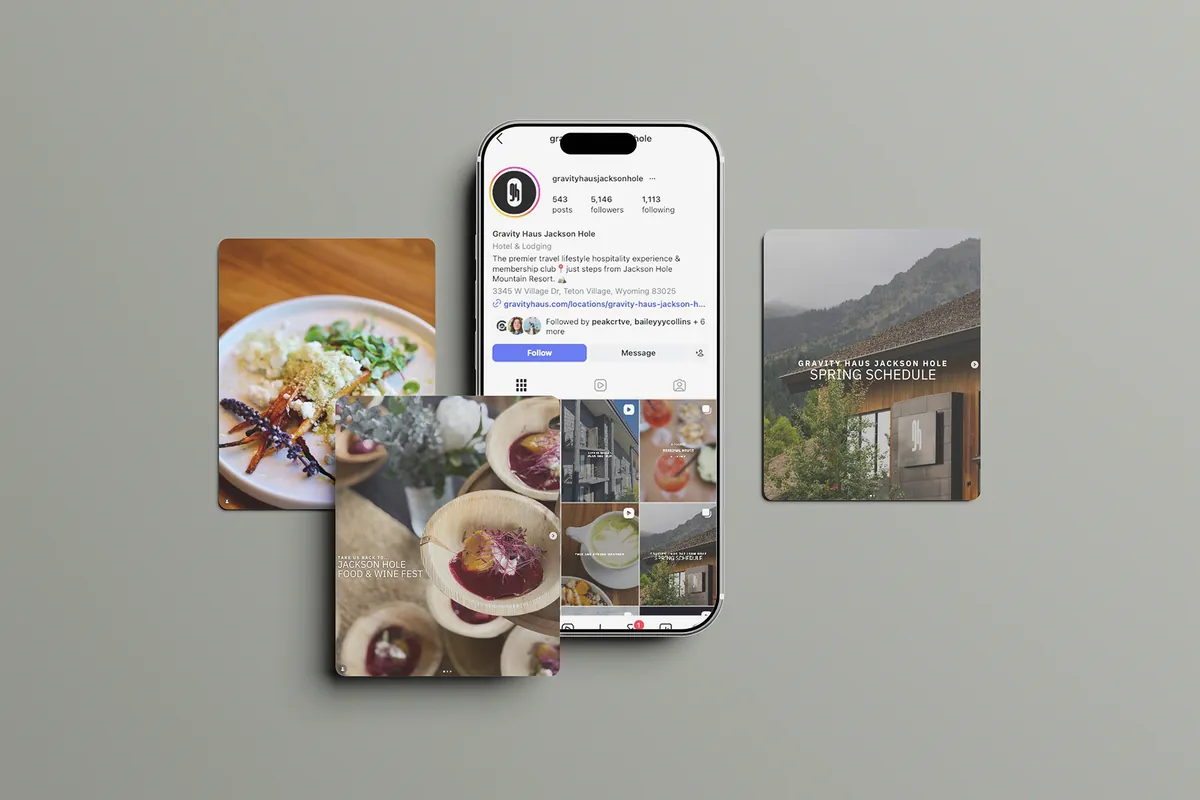
Trends demanded restraint. The question wasn’t whether something could perform, but whether it sounded like Gravity Haus discovering it organically. Credibility was put ahead of reach.
And consistency came before volume: fewer posts, made with intention.
The most important signal never appears in an analytics dashboard. It shows up offline — in conversation and recognition — before it shows up in data.
The Work, Reconsidered
This wasn’t a campaign. It wasn’t a reinvention. It was a process of attention — to people, to place, to rhythm.
In a category crowded with spectacle, Gravity Haus’s social presence learned to do something quieter: reflect the life already happening inside its walls.
Not everything needs to be amplified. Some things only need to be made visible.